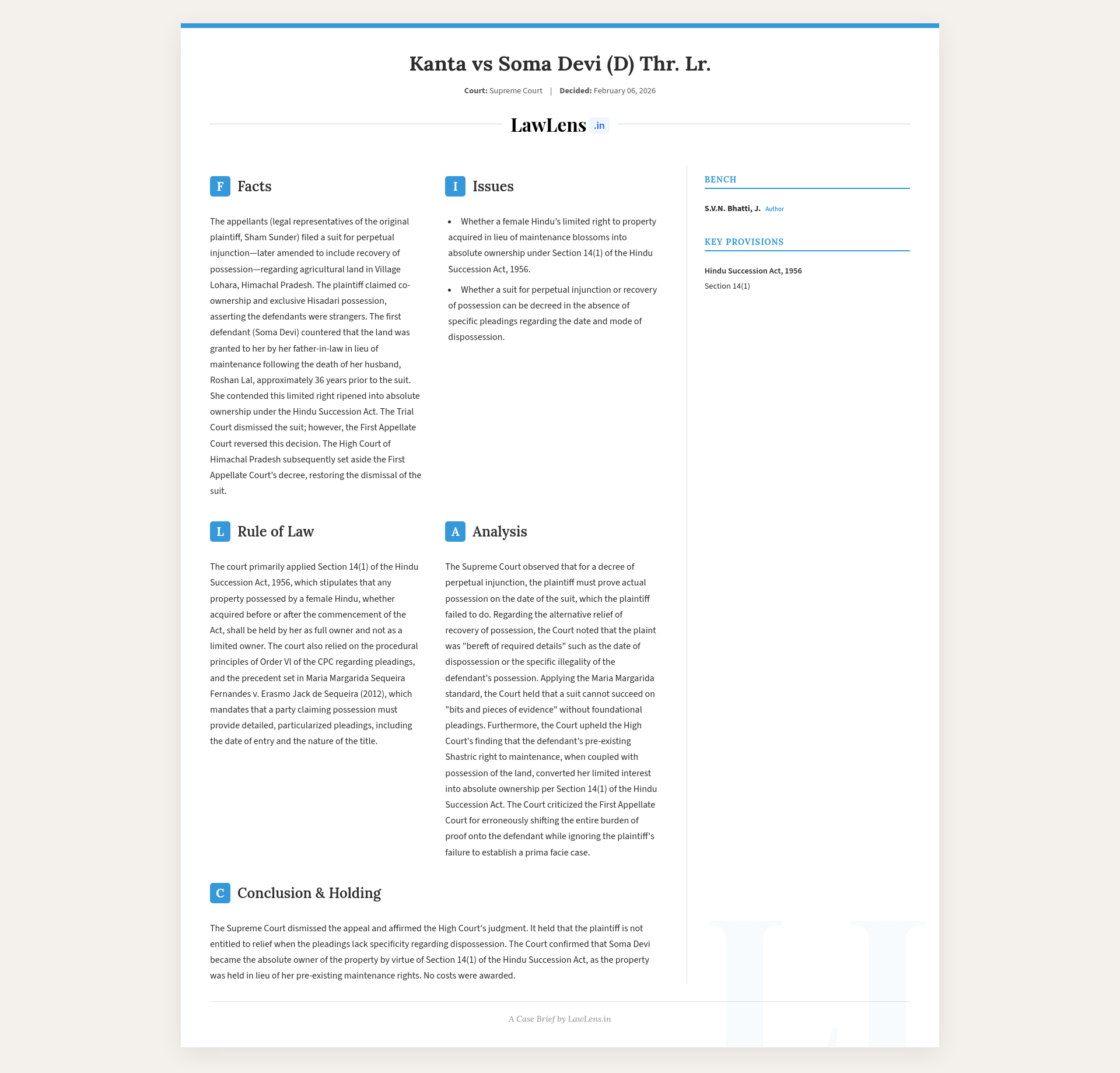
Kanta v. Soma Devi (D) 2026 INSC 133 - Suit For Perpetual Injunction
Specific Relief Act 1963 - Section 38 - Suit For Perpetual Injunction - Essential Conditions - Pleadings Requirement

Specific Relief Act 1963 - Section 38 -Suit For Perpetual Injunction - The plaintiff for the relief of perpetual injunction, along with prima facie case, balance of convenience and irreparable loss, must also prove the actual possession of the suit schedule on the date of filing of the suit - Possession on the date of filing the suit is an essential requisite for granting perpetual injunction. The findings recorded are that the plaintiff was not in possession of the suit schedule property. In a suit for recovery of possession, one of the essential conditions is (i) entitlement, (ii) manner of entitlement, (iii) specifics on the date and mode of dispossession, and conversely (iv) what is the nature of possession claimed by the defendant, and how it is illegal- The person averring a right to continue in possession shall, as far as possible, give a detailed particularised specific pleading along with documents to support his claim and details of subsequent conduct which establish his possession- One who claims possession must give all such details as enumerated hereunder. They are only illustrative and not exhaustive: (a) who is or are the owner or owners of the property; (b) title of the property; (c) who is in possession of the title documents; (d) identity of the claimant or claimants to possession; (e) the date of entry into possession; (f) how he came into possession—whether he purchased the property or inherited or got the same in gift or by any other method; (g) in case he purchased the property, what is the consideration; if he has taken it on rent, how much is the rent, licence fee or lease amount; (h) If taken on rent, licence fee or lease—then insist on rent deed, licence deed or lease deed; (i) who are the persons in possession/occupation or otherwise living with him, in what capacity; as family members, friends or servants, etc.; (j) subsequent conduct i.e. any event which might have extinguished his entitlement to possession or caused shift therein; and k) basis of his claim that not to deliver possession but continue in possession. (Para 11)
Case Info
Basic Case Details
Case name: Kanta and Others v. Soma Devi (Dead) through LR and Others
Neutral citation: 2026 INSC 133
Court: Supreme Court of India, Civil Appellate Jurisdiction
Coram:
- Justice Pankaj Mithal
- Justice S.V.N. Bhatti (author of the judgment)
Judgment date: 06 February 2026
Caselaws and Citations Referred
Only one precedent is cited in the text you shared:
- Maria Margarida Sequeira Fernandes v. Erasmo Jack de Sequeira, (2012) 5 SCC 370
This case is quoted for the detailed requirements of pleadings regarding possession and the right to continue in possession in civil suits.
Brief Summary (Three Sentences)
The dispute concerned agricultural land in Village Lohara, District Una, where the plaintiff claimed ownership and sought a perpetual injunction and, in the alternative, recovery of possession, while the first defendant claimed the land had been given to her in lieu of maintenance after her husband’s death. The Supreme Court upheld the High Court’s view that the defendant’s right to maintenance, recognised under Shastric Hindu Law and read with Section 14(1) of the Hindu Succession Act, had ripened into absolute ownership, and also held that the plaintiff’s pleadings were deficient as to possession and dispossession, making the suit unsustainable. Consequently, the Civil Appeal filed by the plaintiff’s legal representatives was dismissed without any order as to costs.