Rohit Jangde v. State of Chhattisgarh 2026 INSC 162 - S.27 Evidence Act - Accused Not In Custody
Will Section 27 Evidence Act apply when the accused at the time of the statement is not in the custody of the police?

Indian Evidence Act 1872 - Section 27,8 - When the accused at the time of the statement is not in the custody of the police, it is removed from the ambit of Section 27. The knowledge of the accused, which led to the detection of the bone remnants though not acceptable under Section 27 would all the same be acceptable evidence under Section 8, which by itself is a weak piece of evidence. (Para 18)
Indian Evidence Act 1872 - Section 8 -The evidence under Section 8 can only offer corroboration and cannot by itself result in a conviction. (Para 18)
Case Info
Case name and neutral citationRohit Jangde v. State of Chhattisgarh, 2026 INSC 162
CoramJustice Sanjay Kumar and Justice K. Vinod Chandran (judgment authored by K. Vinod Chandran, J.)
Judgment date17 February 2026 (New Delhi)
Case laws and citations referred
- Jaffar Hussain Dastagir v. State of Maharashtra, (1969) 2 SCC 872
- Durlav Namasudra v. Emperor, 1931 SCC OnLine Cal 146
- Dharam Deo Yadav v. State of Uttar Pradesh, (2014) 5 SCC 509
- State of A.P. v. Gangula Satya Murthy, (1997) 1 SCC 272
- Ramkishan Mithanlal Sharma v. State of Bombay, (1954) 2 SCC 516
Statutes / laws referred
- Indian Evidence Act, 1872:
- Section 24–26 (background to Section 27)
- Section 27 (discovery based on information from accused in police custody)
- Section 8 (relevance of conduct of any party)
- Section 106 (burden of proving fact especially within knowledge)
- (Implicitly) Criminal procedure framework relating to arrest, remand and custody (through arrest/court surrender memo and remand orders, though specific CrPC sections are not expressly cited).
Brief summary in three sentences
The Supreme Court held that a badly conducted investigation and discrepant arrest records fatally undermined the prosecution’s “last seen” theory and the alleged recovery under Section 27 of the Evidence Act, though the recovery could still be considered only as weak corroborative conduct under Section 8. While the DNA report conclusively proved the death of the child and linked some recovered bones and teeth to the biological parents, the Court found that the remaining circumstances did not form a complete chain pointing only to the accused’s guilt, especially given the unexplained delay in lodging a missing complaint and doubts about his custody timeline. Granting the benefit of doubt, the Court set aside the conviction and directed the immediate release of the accused, while strongly criticizing the inept investigation.
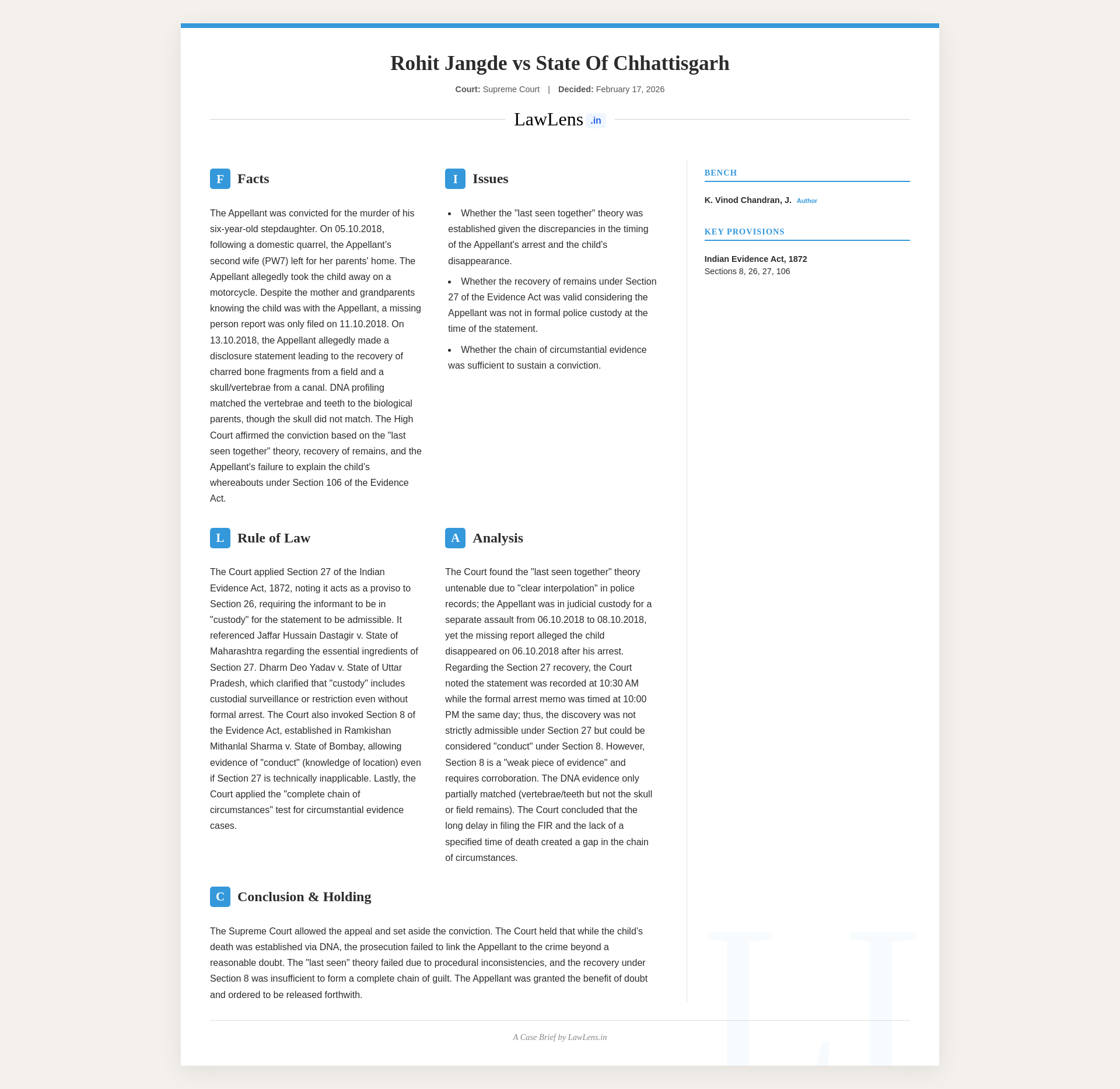
Will Section 27 Evidence Act apply when the accused at the time of the statement is not in the custody of the police? https://t.co/Xet6KNR0DS pic.twitter.com/x8vcTprgno
— CiteCase 🇮🇳 (@CiteCase) February 17, 2026
In this case, the #SupremeCourt decided against the State and acquitted the accused.
— CiteCase 🇮🇳 (@CiteCase) February 17, 2026
But it recorded its appreciation for the Advocate on Record appearing for the State of Chhattisgarh !
If the investigation had been half as good as the preparation of the State Counsel, the… https://t.co/Xet6KNRytq pic.twitter.com/3ujCsZl41z