Ogeppa (D) v. Sahebgouda (D) 2026 INSC 191 - Hereditary Pujari Rights - Evidence - Pleadings
What all should a defendant setting up a competing claim to hereditary pujari rights plead in written statement?

Civil Suit - Hereditary Pujari Rights - A party setting up a competing claim to hereditary pujari rights is obligated to plead specifically—when they came into possession of the suit temple; when they commenced performing puja; when and how the respondents/plaintiffs began obstructing them; and what steps, if any, they took to vindicate their rights during the long intervening period. (Para 23) [Context: The Supreme Court upheld a decree holding that the plaintiffs are the hereditary pujari of the suit temple]
Evidence - Pleading - Oral evidence cannot be a substitute for pleading, and a case not made out in the pleadings cannot be erected on evidence alone. (Para 24)
Constitution of India - Article 136 - jurisdiction under Article 136 of the Constitution of India should be used sparingly. More particularly when dealing with concurrent findings of fact. Unless and until the findings rendered by the courts below are manifestly perverse, this Court should be reluctant to intervene in the same. (Para 16)
Case Info
Case name and neutral citationOgeppa (Dead) through LRs and Others v. Sahebgouda (Dead) through LRs and Others, 2026 INSC 191.
CoramJustice Prashant Kumar Mishra and Justice K. Vinod Chandran.
Date of judgment25 February 2026 (New Delhi).
Case laws and citations referredThe extracted text does not reproduce the names or citations of any precedents; it only contains a general reference to a “catena of judgments” on the limited scope of interference under Article 136 of the Constitution. No specific reported decisions or citations are mentioned in the body of the judgment text provided.
Statutes / laws referredThe Court refers to Article 136 of the Constitution of India (scope of Supreme Court’s discretionary appellate jurisdiction) and Section 80 of the Bombay Public Trusts Act, 1950 (bar of civil court jurisdiction, discussed and held inapplicable in earlier proceedings).
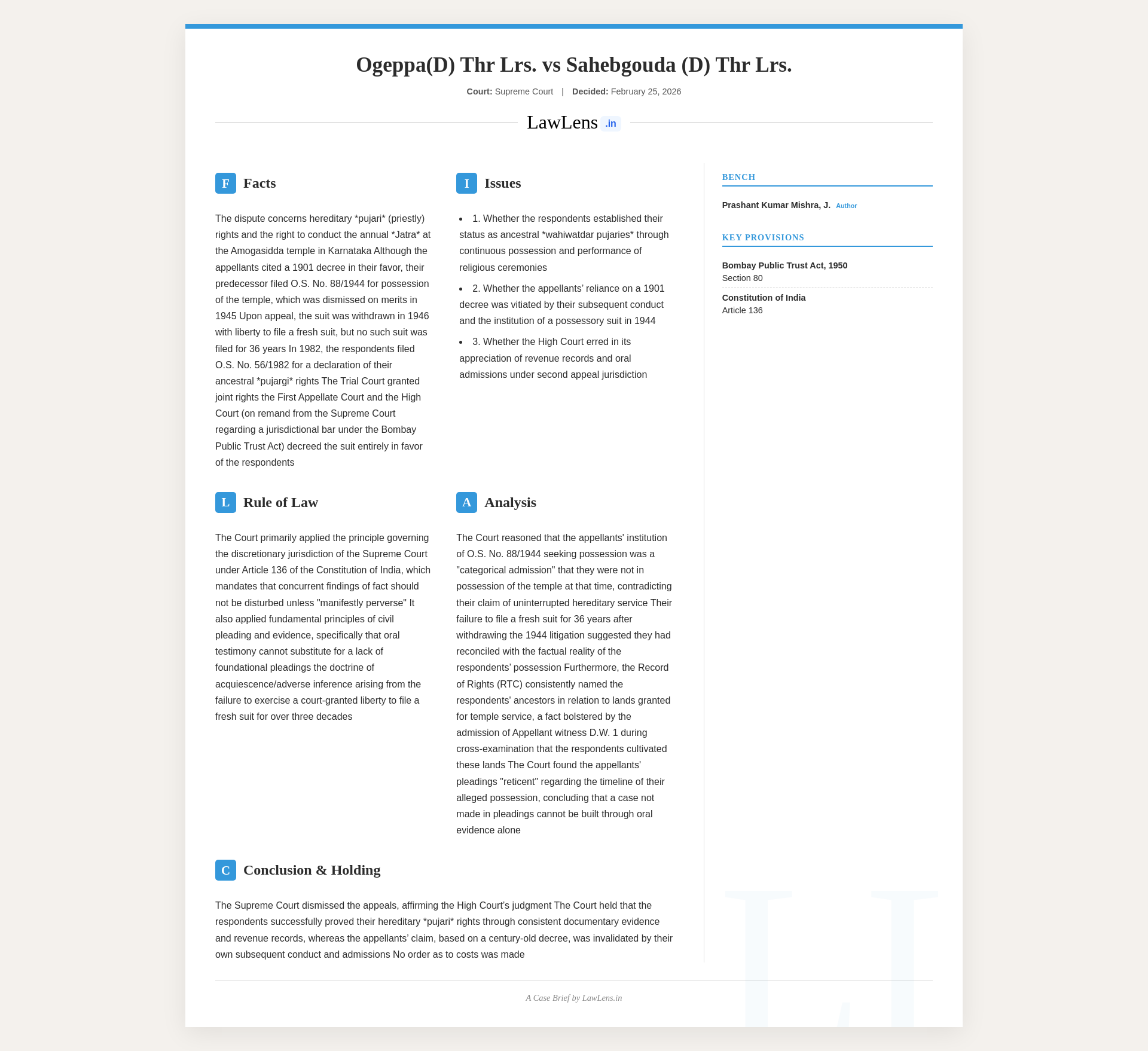
Brief summary (three sentences)This appeal concerned a century‑long dispute between two families over hereditary pujari / wahiwatdar rights to perform puja, conduct jatras and receive offerings at the Amogasidda temple in Karnataka. The Supreme Court noted concurrent factual findings of the First Appellate Court and the High Court that the plaintiffs/respondents had established continuous hereditary priestly rights through revenue records, witness testimony and admissions by the defendants’ own witness, while the defendants’ reliance on a 1901 decree was undermined by their later conduct in filing a 1944 suit for possession and then not pursuing a fresh suit for decades. Holding that there was no perversity in these concurrent findings and that interference under Article 136 was unwarranted, the Court dismissed the civil appeals, affirming the respondents as hereditary pujaries of the suit temple.