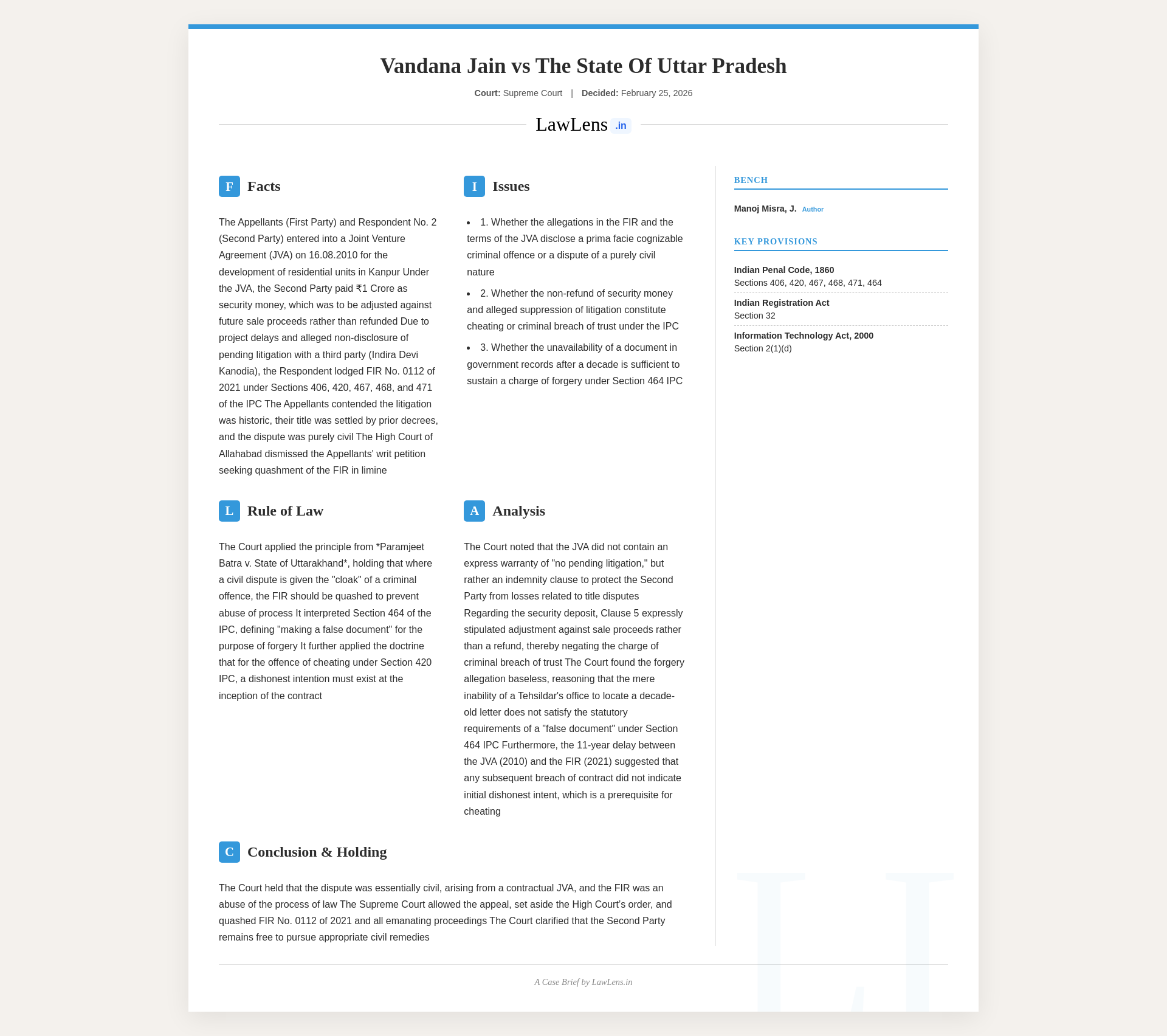
Vandana Jain v. State of Uttar Pradesh 2026 INSC 192 - S.482 CrPC - IPC - Forgery- Non Traceable Document
Merely because a document is not traceable in the records after several years of its issuance, it cannot be said that the document is forged

Indian Penal Code 1860 - Section 464 - Merely because a document is not traceable in the records after several years of its issuance, it cannot be said that the document is forged. A document would be considered forged document only when the allegations are to the effect that it is a false document within the meaning of section 464. (Para 24)
Code of Criminal Procedure 1973 - Section 482 - While considering a prayer to quash an FIR, ordinarily the allegations made therein are to be taken at their face value to assess whether prima facie commission of a cognizable offence is made out or not. However, where the cause espoused in the FIR is essentially of a civil nature, while addressing a quashing petition, the Court must have regard to the attending circumstances and assess whether it has been given cloak of criminal offence and whether proceeding further on the FIR would amount to the abuse of the process of the court/ law. In making such assessment, the Court may consider not only the contents of the FIR but also the admitted facts / documents recited therein. (Para 15) [Context: The Supreme Court held that the FIR registered against the accused under Sections 406, 420, 467, 468 and 471 IPC, arising out of a 2010 Joint Venture Agreement for development of property, disclosed only a civil dispute and not any criminal offence.]
Case Info
Case name and neutral citation:Vandana Jain & Ors. v. State of Uttar Pradesh & Ors., 2026 INSC 192
Coram (Bench):Justice Pamidighantam Sri Narasimha and Justice Manoj Misra
Judgment date:25 February 2026
Statutes / laws referred:
- Indian Penal Code, 1860 – Sections 406 (criminal breach of trust), 420 (cheating), 467, 468, 471 (forgery-related offences), and 464 (definition of “making a false document”)
- Indian Arbitration Act (reference to arbitration clause in the Joint Venture Agreement)
- Indian Registration Act, 1908 – Section 32 (referred in Clause 6.9 of the JVA)
Caselaws and citations referred:
- Paramjeet Batra v. State of Uttarakhand and others, (2013) 11 SCC 673 (relied on to reiterate that essentially civil disputes dressed up as criminal proceedings can be quashed, and that courts should see if a purely civil dispute has been given the cloak of a criminal offence).
Brief 3‑sentence summary:The Supreme Court held that the FIR registered against the appellants under Sections 406, 420, 467, 468 and 471 IPC, arising out of a 2010 Joint Venture Agreement for development of property, disclosed only a civil dispute and not any criminal offence. It found no specific false representation in the JVA about there being no litigation, no material indicating a forged document within the meaning of Section 464 IPC, and noted that the security amount of Rs. 1 crore was contractually stipulated to be adjusted from the first party’s share rather than refunded. Holding that the allegations essentially related to non‑fulfilment of contractual obligations and were being used to give a civil dispute a criminal colour, the Court quashed the FIR and the proceedings emanating from it.