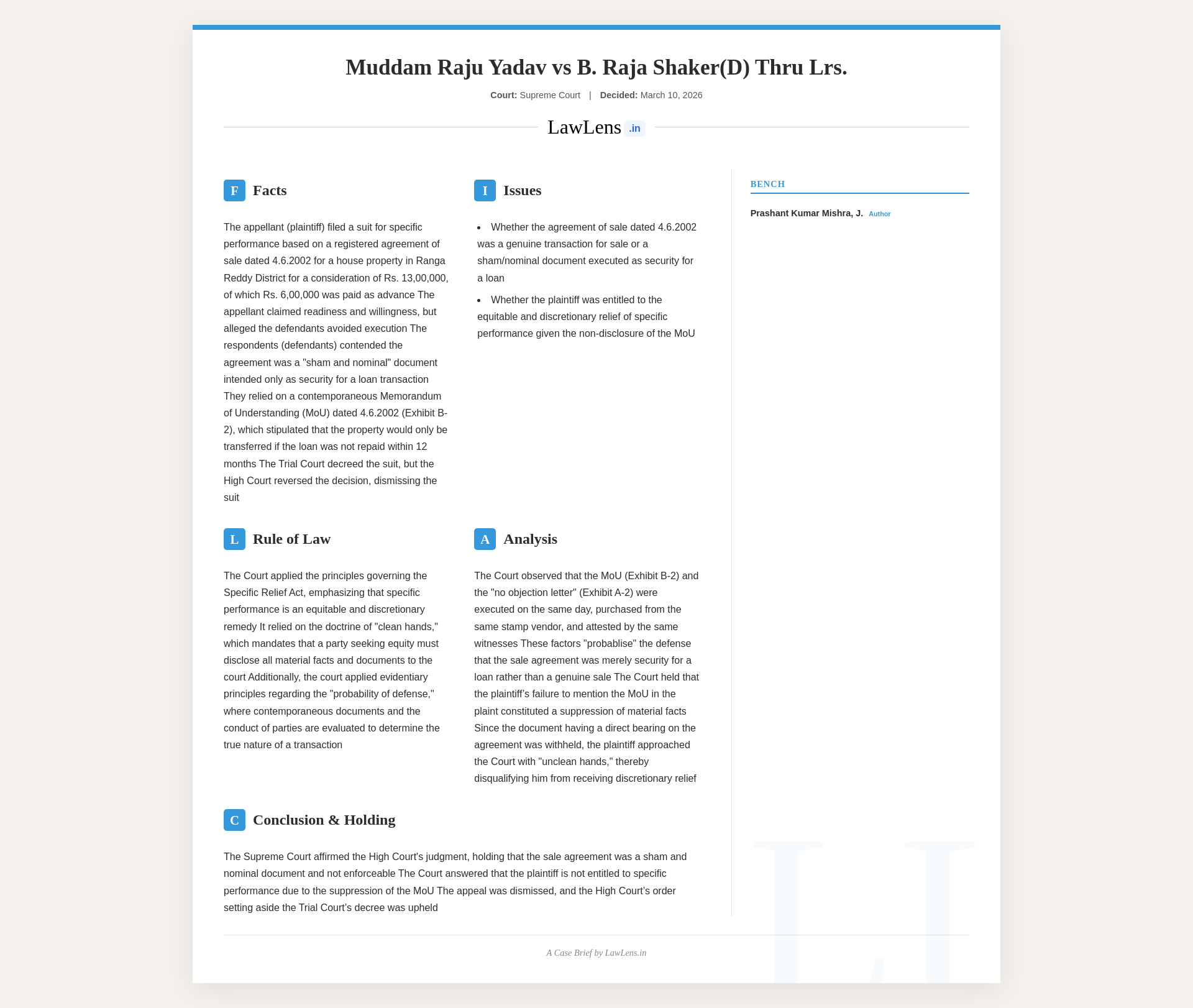
Muddam Raju Yadav v. B. Raja Shanker (D) 2026 INSC 214- Specific Relief Act - Specific Performance Suit - Conduct Of Parties
"In a suit for specific performance, the conduct of the parties is significant.."

Specific Relief Act 1963 - In a suit for specific performance, the conduct of the parties is significant as it assists the Court in evaluating the evidence to find out the bona fides of the parties at the time of execution of the agreement. Even a slight doubt in the mind of the Court that the plaintiff was not acting bonafidely and that the material facts, having bearing on the agreement, have been withheld in the agreement itself and from the Court also, the equitable and discretionary relief has to be denied. A plaintiff approaching the Court with uncleaned hands, a fit case for denial of relief of specific performance. (Para 12) [Context: The Supreme Court found that the plaintiff had approached the Court with unclean hands by withholding the MoU, treated the sale agreement as not a genuine sale transaction, and therefore dismissed the appeal, affirming the High Court’s denial of specific performance.]
Case Info
Basic Case Details
Case name: Muddam Raju Yadav v. B. Raja Shanker (Dead) through LRs & Others
Neutral citation: 2026 INSC 214
Coram:Justice Prashant Kumar MishraJustice Prasanna B. Varale
Judgment date: 10 March 2026, New Delhi
Statutes / Laws Referred
The judgment is in a suit for specific performance of an agreement of sale, so it is grounded in principles under:
- Specific Relief law on specific performance (doctrines of readiness and willingness, equitable and discretionary relief).
- General contract law principles regarding genuineness of contracts, sham/nominal documents, and agreements executed as security for loans.
(No specific sections or Act names are expressly mentioned in the excerpt you provided; the Court relies on general principles rather than citing particular statutory provisions.)
Caselaws and Citations
Within the text you’ve shared, there are no other reported precedents or case citations referred to by name; the Court decides on the facts, probabilities, and equitable principles without quoting prior cases.
Brief Summary (Three Sentences)
The plaintiff sued for specific performance of a registered agreement of sale dated 4.6.2002 for a house property, claiming to have paid Rs. 6,00,000 as advance and to be ready and willing to pay the balance. The defendants contended that the agreement was only a sham and nominal document executed as security for a Rs. 6,00,000 loan, relying in particular on a contemporaneous Memorandum of Understanding (Exhibit B‑2) and surrounding circumstances. The Supreme Court found the MoU and related facts strongly supported the defence, held that the plaintiff had approached the Court with unclean hands by withholding the MoU, treated the sale agreement as not a genuine sale transaction, and therefore dismissed the appeal, affirming the High Court’s denial of specific performance.