Subramani v. State of Karnataka 2026 INSC 249 - Dying Declaration

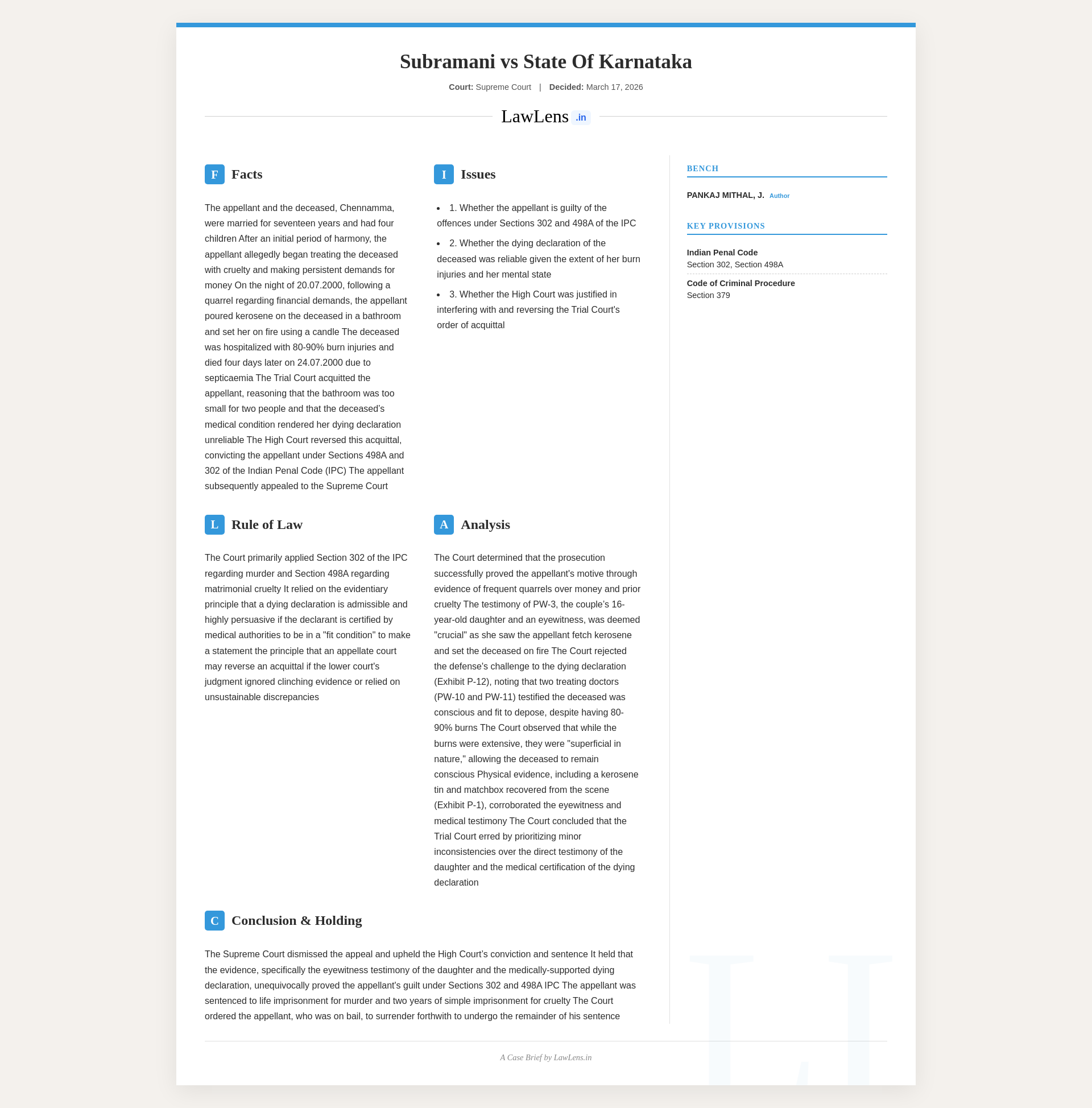
Indian Evidence Act 1872 - Section 32 - In this case, IO deposed that the deceased was not in a conscious state of mind - SC observed : That would not override the statement of the doctors who treated the deceased, especially the one who was on duty and had permitted the police to record the statement of the deceased on being satisfied that she was in a fit condition to make a statement. [Context: The Supreme Court upheld the Karnataka High Court’s reversal of acquittal and confirmed the conviction of Subramani under Sections 302 and 498A IPC for burning his wife Chennamma to death after years of cruelty and demands for money. Relying on the eyewitness testimony of their 16‑year‑old daughter, the medical evidence, recovery of kerosene and matchbox from the scene, and a duly certified dying declaration recorded in hospital, the Court found the prosecution case fully proved. It held that minor discrepancies and the opinion of some witnesses about the victim’s consciousness could not override the clear evidence of the treating doctors and the consistent account that the husband poured kerosene and set her on fire.]
Case Info
Basic Case Information
Case name: Subramani v. State of KarnatakaNeutral citation: 2026 INSC 249Coram: Hon’ble Mr. Justice Pankaj Mithal, Hon’ble Mr. Justice S.V.N. BhattiJudgment date: 17 March 2026
Statutes / Laws Referred
The judgment refers to and proceeds under:
- Section 302, Indian Penal Code (IPC) – punishment for murder.
- Section 498A, Indian Penal Code (IPC) – cruelty by husband or relatives of husband.
- Section 379, Code of Criminal Procedure (Cr.P.C.) – appeal to Supreme Court in case of acquittal.