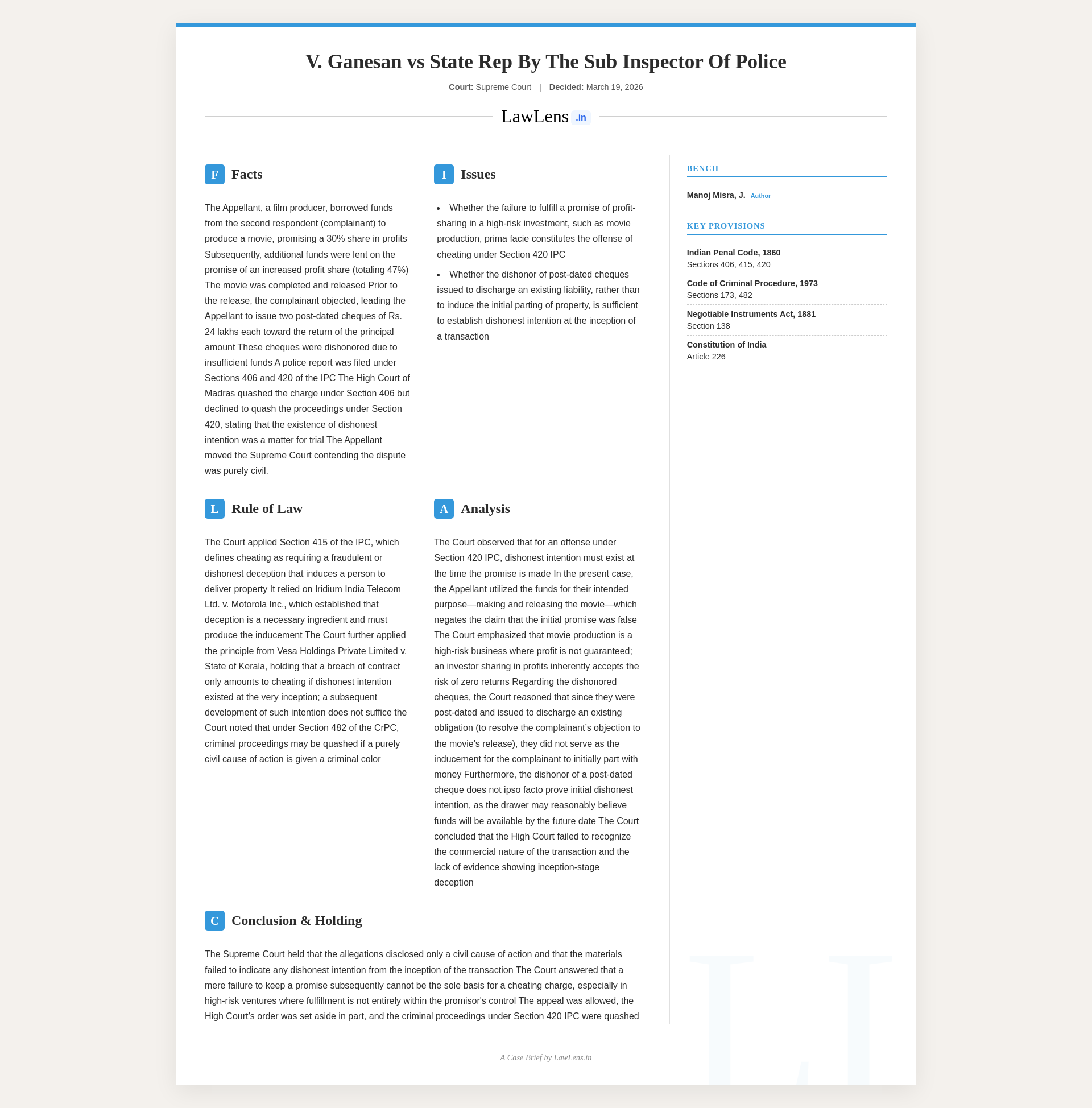
V. Ganesan v. State 2026 INSC 265 - S.420 IPC - Post Dated Cheque Dishonour
"Dishonour of a postdated cheque by itself is not sufficient to presume existence of a dishonest intention on part of its drawer."

Indian Penal Code 1860 - Section 415,420 -Dishonour of a postdated cheque by itself is not sufficient to presume existence of a dishonest intention on part of its drawer. Therefore, dishonour of those cheques, though may give right to initiate proceeding under Section 138 of the Negotiable Instruments Act, 1881, would not ipso facto amount to an offence of cheating, inasmuch as for an offence of cheating dishonest intention must exist from the very beginning. (Para 18) [Context: In this case, the Supreme Court held that where money was invested in a film project on a profit‑sharing basis, and the film was in fact completed and released, the mere failure to generate profits and the subsequent dishonour of post‑dated cheques do not, by themselves, establish dishonest intention at the inception so as to constitute cheating under Section 420 IPC]
Case Info
Basic Case Information
Case name and neutral citation:V. Ganesan v. State rep. by the Sub Inspector of Police & Anr., 2026 INSC 265
Coram:Justice Pamidighantam Sri Narasimha and Justice Manoj Misra (author of the judgment)
Judgment date:19 March 2026 (New Delhi)
Case Laws and Citations Referred
- Iridium India Telecom Ltd. v. Motorola Inc., (2011) 1 SCC 74 – cited for the ingredients of the offence of cheating under Section 415 IPC and the requirement of deception and dishonest intention at the time of inducement.
- Vesa Holdings Private Limited and Another v. State of Kerala and others, (2015) 8 SCC 293 – cited to emphasize that every breach of contract is not cheating, and that dishonest intention must exist at the inception of the transaction for Section 420 IPC to be attracted.
Statutes / Laws Referred
- Indian Penal Code, 1860 (IPC)
- Section 406 – Criminal breach of trust
- Section 415 – Definition of cheating (quoted and analysed)
- Section 420 – Cheating and dishonestly inducing delivery of property
- Code of Criminal Procedure, 1973 (CrPC)
- Section 173 – Police report (final report)
- Section 482 – Inherent powers of the High Court to quash proceedings
- Negotiable Instruments Act, 1881
- Section 138 – Dishonour of cheque (referred while explaining that cheque dishonour here, at best, gives rise to NI Act proceedings, not cheating by itself)
- Constitution of India
- Article 226 – Referred in a general sense as another source of power for High Courts to quash criminal proceedings.
Three‑Sentence Brief Summary
The Supreme Court held that where money was invested in a film project on a profit‑sharing basis, and the film was in fact completed and released, the mere failure to generate profits and the subsequent dishonour of post‑dated cheques do not, by themselves, establish dishonest intention at the inception so as to constitute cheating under Section 420 IPC. Relying on Iridium India and Vesa Holdings, the Court reiterated that for cheating, deception and fraudulent or dishonest intention must exist at the time of inducement, and that a mere breach of promise in a risky commercial venture is essentially a civil dispute. Consequently, it set aside the Madras High Court’s refusal to quash the Section 420 IPC proceedings and quashed the criminal case to that extent, leaving the dispute to be pursued, if at all, through civil or NI Act remedies.