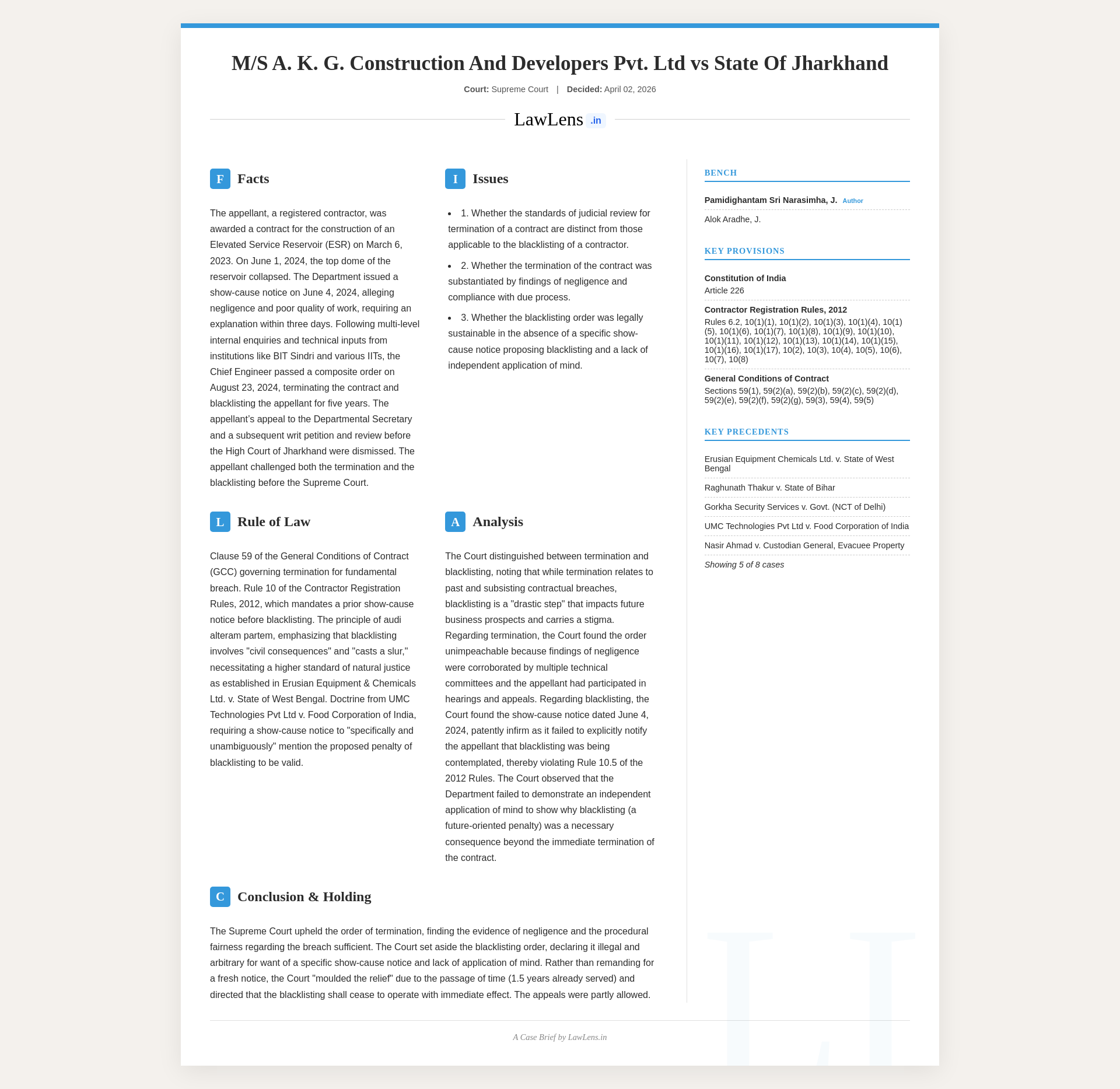
A.K.G. Construction and Developers Pvt. Ltd. v. State of Jharkhand 2026 INSC 312 -Blacklisting
Blacklisting, being stigmatic and exclusionary in nature, cannot be imposed mechanistically but must comport with principles of natural justice and reasonableness

Blacklisting- Blacklisting, being stigmatic and exclusionary in nature, cannot be imposed mechanistically but must comport with principles of natural justice and reasonableness (Para 3)- Proceedings for termination should not be conflated with proceedings for blacklisting. In the latter action, what is at stake is the future of the contractor. A blacklisting order assumes that the contractor is an incorrigible entity, at least for some time to come, in this case such an assumption was intended to operate for five years. For giving effect to such a premise, there has to be sufficient evidence, clear application of mind and stronger adherence to principles of natural justice. (Para 23) [Context: The Supreme Court upheld the termination of the contractor’s works for negligence and poor‑quality construction that led to the collapse of an under‑construction elevated service reservoir, finding both the factual findings and the procedure on termination to be unimpeachable. However, it held that blacklisting is not an automatic or “logical” consequence of termination, has serious civil and future business consequences, and therefore requires a specific, clear show‑cause notice indicating a proposal to blacklist and an independent application of mind in line with Rule 10.5 of the 2012 Rules and principles of natural justice. Since the show‑cause notice did not explicitly propose blacklisting and the final blacklisting order lacked proper reasoning, the Court set aside the blacklisting as illegal and arbitrary and directed that it cease to operate with immediate effect.]
Case Info
Case name and neutral citation: M/S A.K.G. Construction and Developers Pvt. Ltd. v. State of Jharkhand & Ors., 2026 INSC 312
Coram:Justice Pamidighantam Sri Narasimha and Justice Alok Aradhe
Judgment date:02 April 2026 (New Delhi)
Case Laws and Citations Referred
From the text provided, the judgment refers to and relies on (among others):
- Erusian Equipment & Chemicals Ltd. v. State of West Bengal, (1975) 1 SCC 70
- Raghunath Thakur v. State of Bihar, (1989) 1 SCC 229
- Gorkha Security Services v. Govt. (NCT of Delhi), (2014) 9 SCC 105
- Nasir Ahmad v. Custodian General, Evacuee Property, (1980) 3 SCC 1
- UMC Technologies Pvt. Ltd. v. Food Corporation of India, (2021) 2 SCC 551
- Kulja Industries Ltd. v. Chief General Manager, Western Telecom Project BSNL, (2014) 14 SCC 731
- The Blue Dreamz Advertising Pvt. Ltd. & Anr. v. Kolkata Municipal Corporation & Ors., 2024 INSC 589
- M/s Techno Prints v. Chhattisgarh Textbook Corporation & Anr., 2025 INSC 236
Statutes / Rules / Contract Clauses Referred
Key legal instruments discussed are:
- General Conditions of Contract (GCC) – especially Clause 59 (Termination), including sub‑clauses 59.1 to 59.5.
- Contractor Registration Rules, 2012 (Jharkhand) – Rule 10 (Blacklisting), particularly:
- Rule 10.1 (grounds for blacklisting), including 10.1.8 (failure to execute work as per agreement/specifications) and 10.1.15 (poor quality work)
- Rule 10.2 to 10.4 (consequences: debarment, cancellation of registration, stopping works, forfeiture of security)
- Rule 10.5 (necessity of show cause notice before blacklisting)
- Rules 10.6 to 10.8 (competent authority, appeal, issuance after government approval)