State of Kerala v. K.A. Abdul Rasheed 2026 INSC 365 - Prevention of Corruption Act
The false explanation given by the accused insofar as the acceptance is another compelling circumstance pointing to the guilt of the accused.

Prevention of Corruption Act, 1988 - Though the accused is entitled to take inconsistent stances in defense, the explanation offered for accepting the amount cannot validly lead to a rebuttal, if the suggestion made and explanation offered are contrary and the subject of the alleged loan itself having spoken yet otherwise in his evidence. The false explanation given by the accused insofar as the acceptance is another compelling circumstance pointing to the guilt of the accused.(Para 16)
Criminal Trial - As a matter of prudence, every court considering the deposition of a hostile witness has to look at the extent of the deposition, which is creditworthy to provide proof, of the case set up. (Para 14)
Case Info
Case Information
Case name: The State of Kerala v. K.A. Abdul Rasheed
Neutral citation: 2026 INSC 365
Coram:Justice Sanjay Kumar and Justice K. Vinod Chandran
Judgment date: 15 April 2026 (New Delhi)
Case Laws and Citations Referred
- Neeraj Dutta v. State (NCT of Delhi), (2023) 4 SCC 731
- Jayaraj B. v. State of Andhra Pradesh, 2014 KHC 4199
- Sat Paul v. Delhi Administration, (1976) 1 SCC 727
Statutes / Laws Referred
- Prevention of Corruption Act, 1988
- Section 7
- Section 13(1)(d)
- Section 13(2)
- Section 20 (presumption)
- Code of Criminal Procedure, 1973
- Section 161 (statement to police)
Three‑Sentence Brief Summary
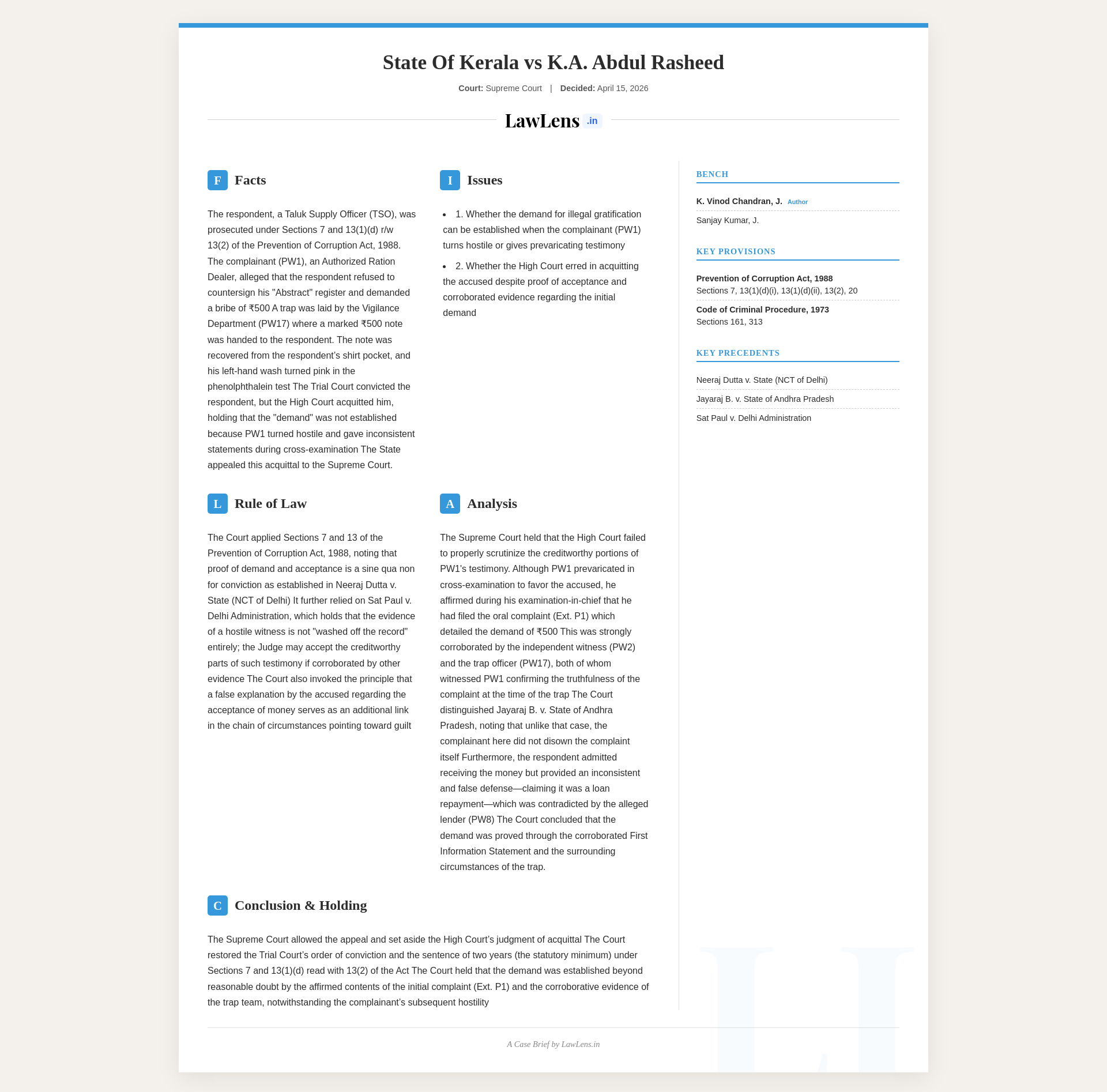
The case concerns a Taluk Supply Officer accused of demanding and accepting a bribe of Rs. 500 from an Authorized Ration Dealer for countersigning the “Abstract” relating to ration cards, in violation of Sections 7 and 13(1)(d) read with 13(2) of the Prevention of Corruption Act, 1988. The trial court convicted the accused, but the High Court acquitted him on the ground that demand was not proved, especially as the complainant turned hostile and one independent witness to the trap was not examined. The Supreme Court, relying on the credible portions of the hostile complainant’s testimony, corroboration by the independent witness and the trap officer, and the admitted acceptance of tainted money coupled with a false explanation, held that demand and acceptance were proved, set aside the High Court’s acquittal, and restored the trial court’s conviction and minimum sentence.