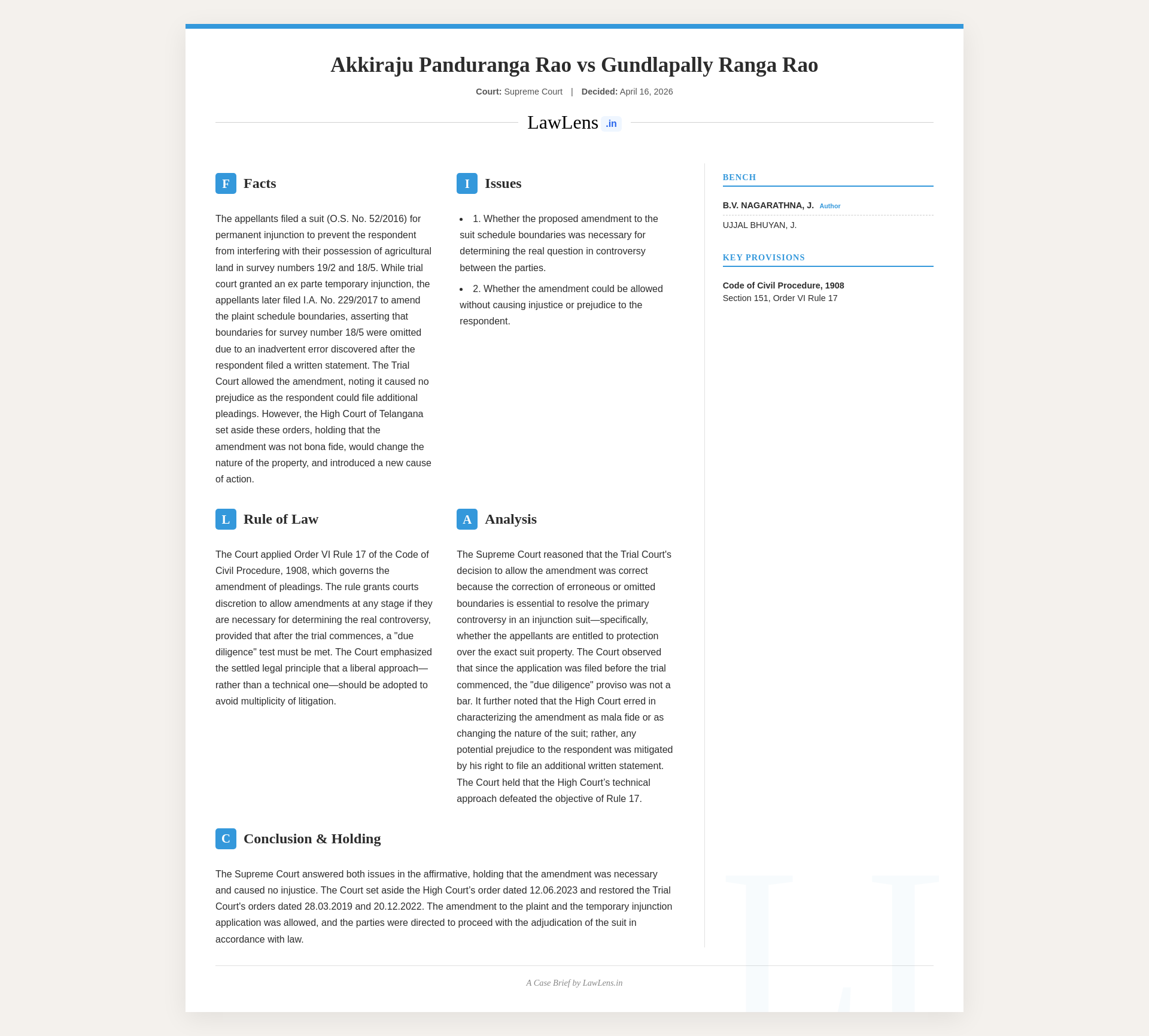
Akkiraju Panduranga Rao v. Gundlapally Ranga Rao 2026 INSC 428 CPC - Amendment Of Pleadings -Liberal Approach
While deciding an application seeking amendment of pleadings, courts should not delve into the technicalities of law; rather, a liberal approach should be followed.

Code of Civil Procedure 1908 - Order VI Rule 17 - Courts have a discretion to allow all amendments that may be necessary for determining the real question in controversy between the parties, provided it does not cause injustice or prejudice to the other side- While deciding an application seeking amendment of pleadings, courts should not delve into the technicalities of law; rather, a liberal approach should be followed, inasmuch as the object and purpose of allowing amendment in the pleadings is to avoid multiplicity of litigation. (Para 15-17)
Case Info
Case Information
Case name and neutral citation:Akkiraju Panduranga Rao & Anr. v. Gundlapally Ranga Rao, 2026 INSC 428
Coram:Justice B.V. Nagarathna and Justice Ujjal Bhuyan (Supreme Court of India)
Judgment date:16 April 2026 (New Delhi)
Statutes / laws referred:
- Code of Civil Procedure, 1908
- Order VI Rule 17 (Amendment of pleadings)
- Section 151 CPC (inherent powers – mentioned in describing I.A. No.229/2017)
Caselaws and citations mentioned:The judgment text you provided does not cite or quote any other case law; it only reproduces and applies Order VI Rule 17 CPC and general settled principles on amendment of pleadings.
Three‑sentence brief summary
The appellants, owners of agricultural land, had filed a suit for permanent injunction and later sought amendment of the plaint schedule to correctly mention the boundaries of one survey number that had been inadvertently omitted, and the trial court allowed this amendment (and the corresponding amendment in the injunction application). The High Court, in revision, set aside these orders, holding that the amendment would change the nature of the property, introduce a new cause of action, and was not bona fide. The Supreme Court held that the amendment was necessary to determine the real controversy, caused no prejudice to the respondent, restored the trial court’s orders allowing the amendments, set aside the High Court’s order, and directed that the suit proceed in accordance with law.