Pila Pahan @ Peela Pahan vs State of Jharkhand 2026 INSC 604 - Delay In Judgment Pronouncement -Guidelines

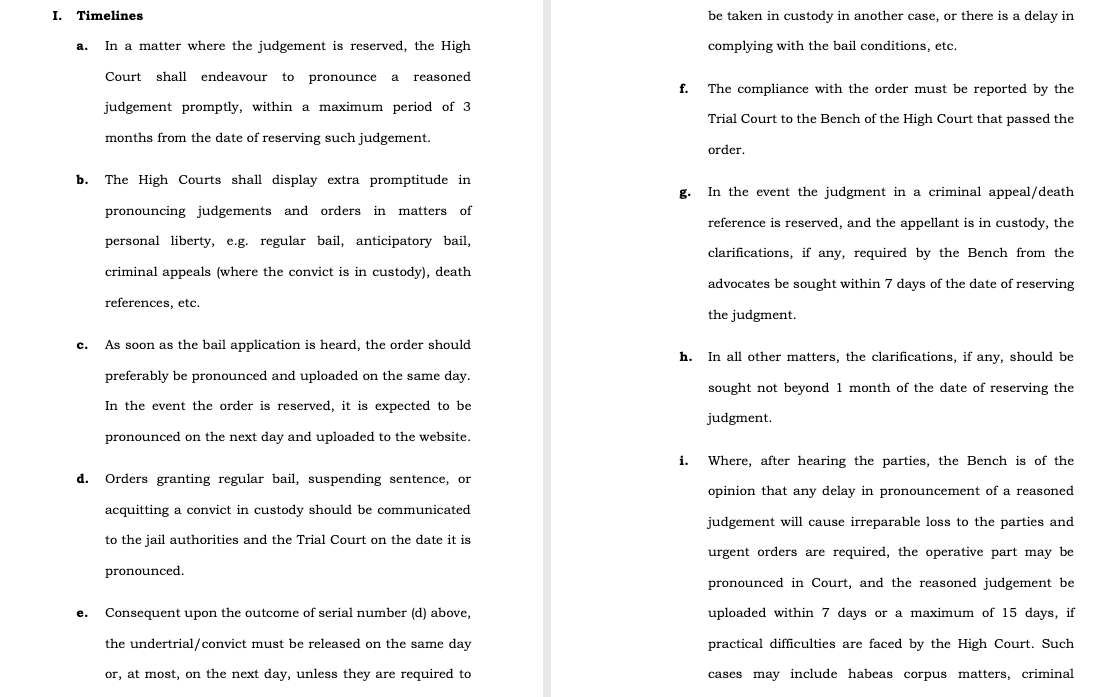
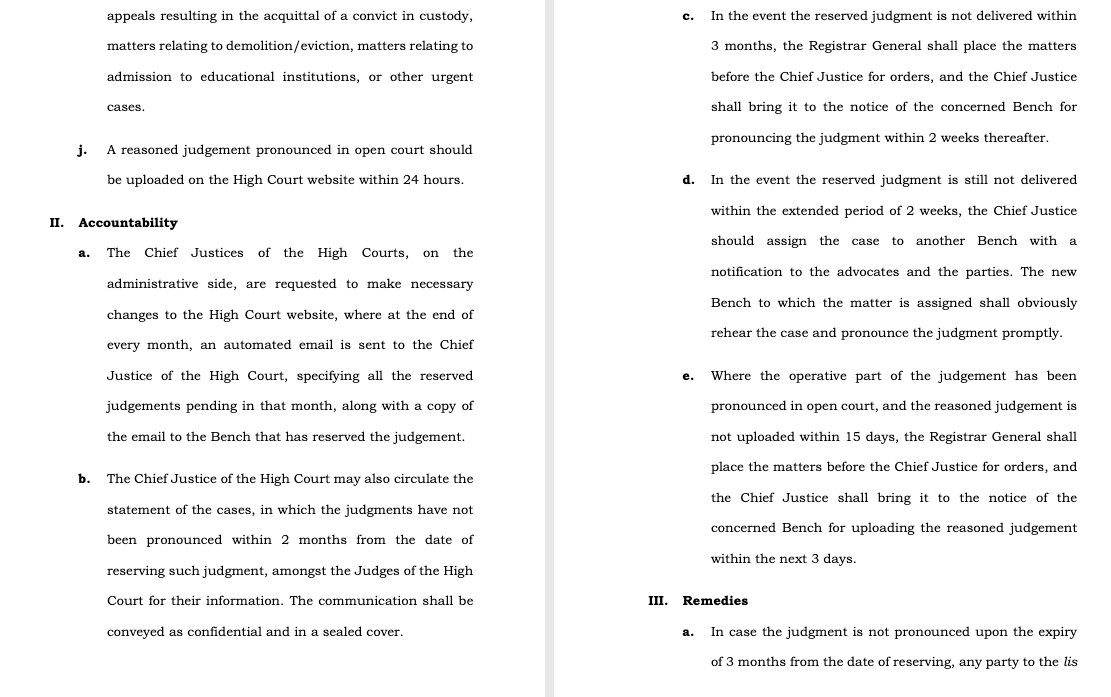
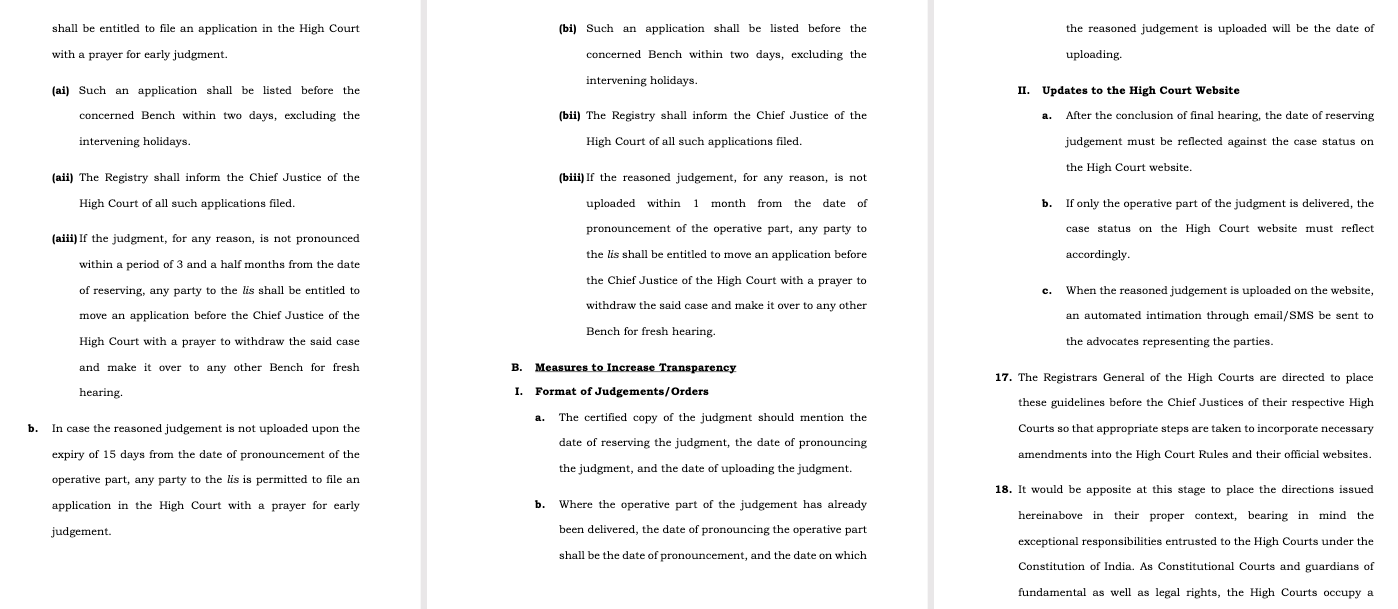
Constitution of India – Article 21 — Practice and Procedure- The right to life and personal liberty guaranteed under Article 21 of the Constitution is not confined to the expeditious conduct of a trial and extends to every stage of the proceeding and is as much violated by such delay in pronouncing a reserved judgement as by a denial of the right to be heard. (Para 9) [Context: Supreme Court issues comprehensive guidelines which will operate as binding directions upon all High Courts across the country: All High Courts should ordinarily pronounce reserved judgments within three months, with much stricter timelines for matters involving personal liberty (especially bail, criminal appeals with the convict in custody, and death references), and must upload reasoned judgments within 24 hours of pronouncement or within 7–15 days where only the operative part is initially delivered. Chief Justices must institute automated monitoring (monthly emails of all reserved matters), internal alerts for cases pending beyond two months, and escalation mechanisms including placing long‑pending matters before the Chief Justice and, if still delayed, reassignment to another Bench for rehearing. Litigants are given explicit remedies: they may move applications for early judgment or uploading of reasons once the three‑month or 15‑day/one‑month thresholds are crossed, with such applications to be listed within two days, and High Court websites and certified copies must reflect dates of reservation, pronouncement and uploading, as well as clear case‑status notations.]