In Re: 2 Million Lives at Risk, Contamination in Jojari River, Rajasthan 2026 INSC 610 – Environmental Governance

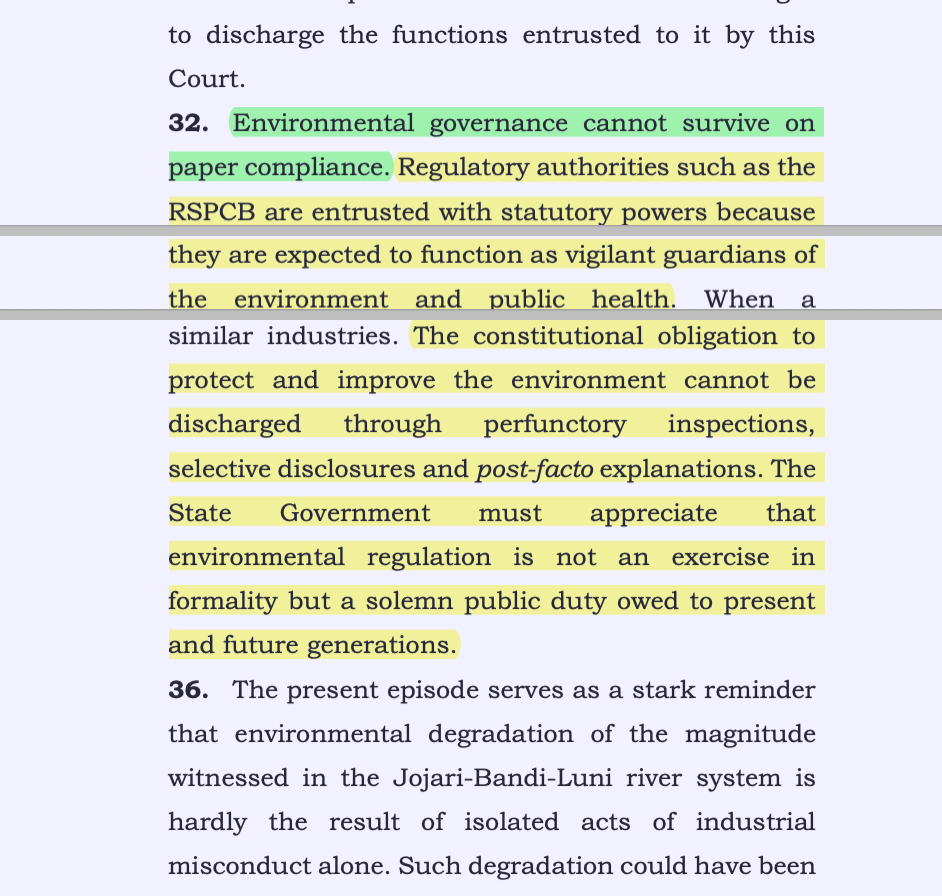
Environmental Law- Constitution of India – Articles 21, 48A and 142 — Environmental governance cannot survive on paper compliance and regulatory authorities entrusted with statutory powers are expected to function as vigilant guardians of the environment and public health; The constitutional obligation to protect and improve the environment cannot be discharged through perfunctory inspections, selective disclosures and post-facto explanations. The State Government must appreciate that environmental regulation is not an exercise in formality but a solemn public duty owed to present and future generations. (Paras 32–35) [Context: The Supreme Court, in continuing mandamus proceedings on pollution of the Jojari‑Bandi‑Luni river system, addressed two urgent developments: extensive sludge accumulation posing grave monsoon‑related risks, and the discovery of a concealed underground effluent conduit bypassing the CETP. Exercising Article 142, it ordered constitution of an SIT, basin‑wide sludge removal and strict control over resumption of industrial operations, applying the polluter‑pays and environmental restitution principles. The Court also directed suspension and departmental proceedings against the concerned Regional Officer of the Pollution Control Board, and mandated strong security and support for the High‑Level Ecosystem Oversight Committee. ]