Sonal Talpada v. Veerbhan Singh 2026 INSC 620 – Cruelty; Prolonged Duration - Living Separately

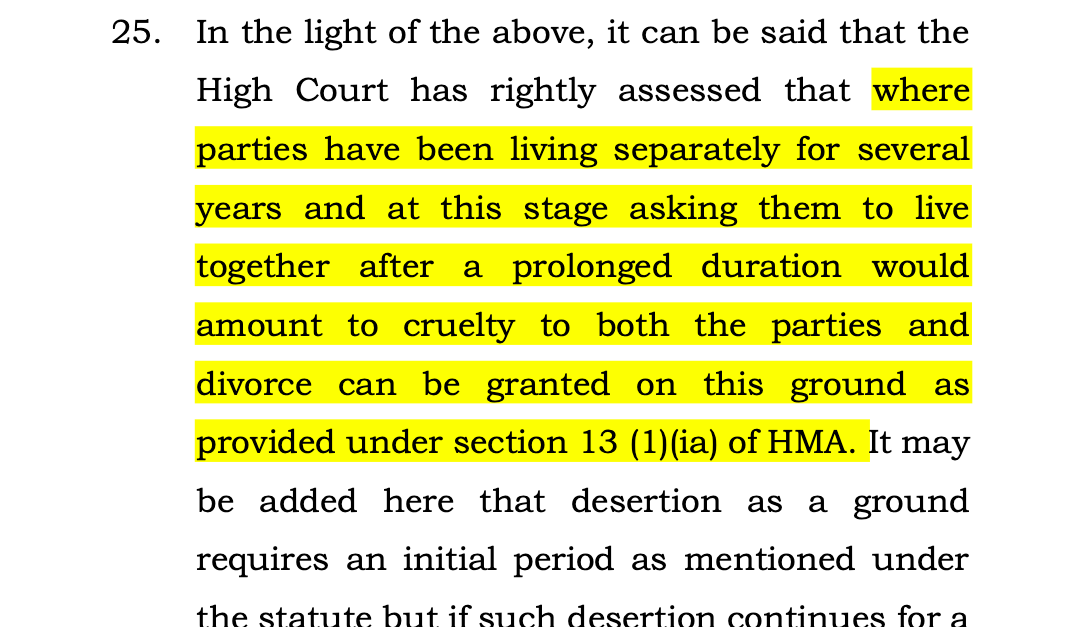
Hindu Marriage Act, 1955 – Section 13(1)(ia) — Where parties have been living separately for several years and asking them to live together after a prolonged duration would amount to cruelty to both the parties, divorce can be granted on this ground as provided under Section 13(1)(ia) of HMA. (Para 25) Matrimonial Appeal - Desertion as a ground requires an initial period as mentioned under the statute but if such desertion continues for a long period of time without any effort on the part of the parties to restore cohabitation would itself be a ground to be considered by the Appellate Court. Appeal is the continuation of a suit and therefore, the Appellate Court would be entitled and justified to consider the conduct of the parties during the pendency of litigation. The same can also be looked into to support or reject an opinion on the ground in question. An Appellate Court, while carefully ensuring that a party does not profit from their own manifest wrong or unilateral desertion, may legitimately treat a prolonged period of separation as an indicator of mental cruelty within the meaning of Section 13(1)(ia) of the HMA. The Appellate Court is not precluded from examining whether continuous separation over C.A. @ SLP (C) No.10422/2025 Page 16 of 26 a substantial period, coupled with absence of any genuine effort at reconciliation, complete cessation of cohabitation and emotional alienation has resulted in mental cruelty. Subsequent events occurring during pendency of proceedings may legitimately be taken into consideration while undertaking such assessment. (Para 25-26))
Hindu Marriage Act, 1955 – Section 13(1)(ia) —Denial of conjugal rights including persistent refusal of sexual intercourse without a reasonable cause constitutes mental cruelty and is a valid ground for divorce under Section 13(1)(ia) of the HMA. Withholding sexual intimacy inflicts severe emotional distress and undermines the bedrock of marriage. (Para 19)
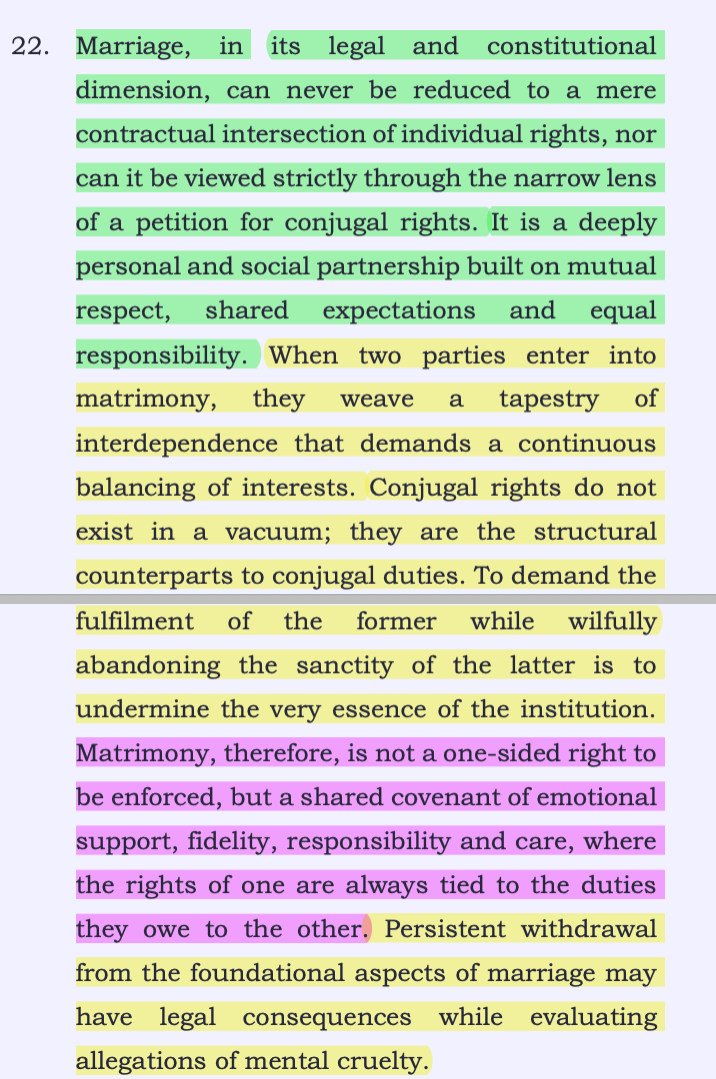
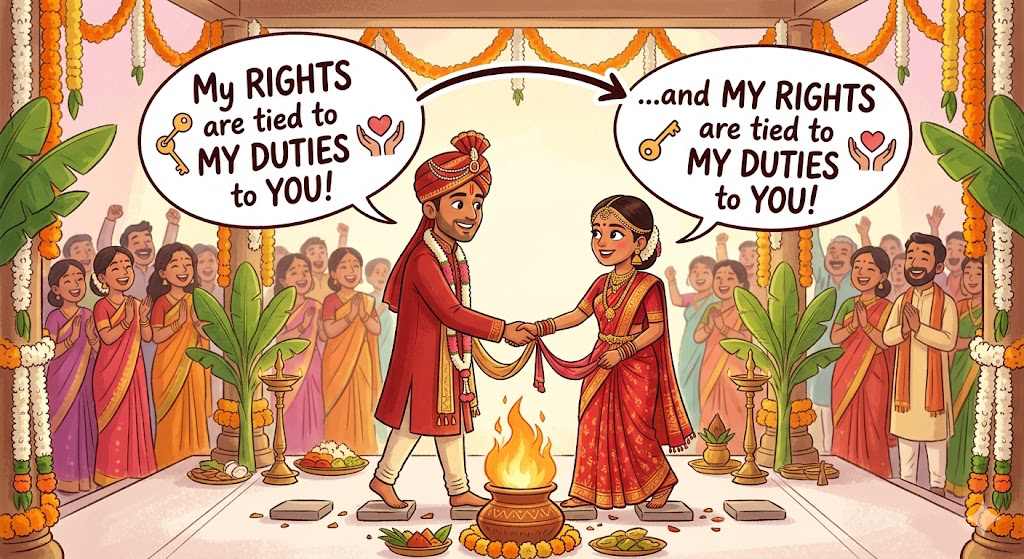
Marriage - Marriage, in its legal and constitutional dimension, can never be reduced to a mere contractual intersection of individual rights, nor can it be viewed strictly through the narrow lens of a petition for conjugal rights. It is a deeply personal and social partnership built on mutual respect, shared expectations and equal responsibility. When two parties enter into matrimony, they weave a tapestry of interdependence that demands a continuous balancing of interests. Conjugal rights do not exist in a vacuum; they are the structural counterparts to conjugal duties. To demand the ulfilment of the former while wilfully abandoning the sanctity of the latter is to undermine the very essence of the institution. Matrimony, therefore, is not a one-sided right to be enforced, but a shared covenant of emotional support, fidelity, responsibility and care, where the rights of one are always tied to the duties they owe to the other. (Para 22)